Some Nepal treks are harder on the legs than their difficulty rating suggests. Compare popular routes by stone steps, steep descents and overall trail character to see which feel gentler to hike.
Which Nepal Treks Have Gentler Trails? Comparing Steep Descents and Stone Steps
Table of Contents
A trek does not have to reach extreme altitude to feel hard on your legs. In Nepal, some shorter and lower-altitude routes still have long stone staircases, repeated drops into river valleys and steep climbs back up.
At the same time, a higher and longer trek may follow a more gradual trail for much of the journey.
That is why labels such as “easy,” “moderate” or “challenging” do not tell you everything about what a trail actually feels like to walk.
If you would rather avoid endless stone steps or steep downhill sections, it helps to look at the terrain itself. Here is how several popular Nepal treks compare for trail gradient, stone steps and descents, rather than overall trek difficulty.
Which Nepal Treks Have the Gentlest Trails?
Among Nepal's popular trekking routes, Langtang Valley has some of the more gradual sections, especially as the valley opens up higher along the route. The classic Everest Base Camp trail also has long stretches without the continuous stone staircases found on some Annapurna routes.
Annapurna Base Camp and Poon Hill have far more steps, while Mardi Himal includes some fairly steep sections despite being a shorter trek. The Annapurna Circuit varies considerably. Much of the route gains elevation gradually, but the descent from Thorong La is a major exception.
Here is a simple comparison:
| Trek | Stone Steps | Steep Descents | Repeated Ups and Downs | General Trail Character |
|---|---|---|---|---|
| Langtang Valley | Some | Some | Moderate | Mixed lower trail, more gradual higher in the valley |
| Everest Base Camp | Some | Moderate | High | Established trail with several major climbs and descents |
| Annapurna Circuit | Some | High around Thorong La | Moderate | Often gradual, but highly variable |
| Mardi Himal | Moderate | High in places | Moderate | Shorter but often steep |
| Poon Hill | High | High | High | Stair-heavy, especially on the classic route |
| Annapurna Base Camp | High | High | High | Repeated stone-step descents and climbs |
These are comparisons of the trail itself, not rankings of which trek is easiest overall.
Which Routes Feel Most Gradual Underfoot?
Langtang Valley
Langtang Valley is one of the better options if you prefer a trek where at least part of the route follows a more gradual valley trail.
The lower route from Syabrubesi is not flat. It passes through forest, crosses the Langtang Khola and includes stone steps, uneven ground and regular changes in elevation.
Farther into the valley, the terrain begins to open up. Around Langtang Village and toward Kyanjin Gompa, the route generally feels less dominated by steep steps and constant changes in elevation.
This does not mean every part of the trek is gentle. Optional climbs such as Kyanjin Ri or Tserko Ri are much steeper and should be considered separately from the main valley route.
Everest Base Camp
Everest Base Camp may seem like an unusual trek to include in a discussion about gentler trails.
It is certainly not an easy trek. The altitude is much higher, the journey is longer and there are several demanding climbs. But if your main concern is continuous stone staircases, EBC feels quite different from routes such as ABC or Poon Hill.
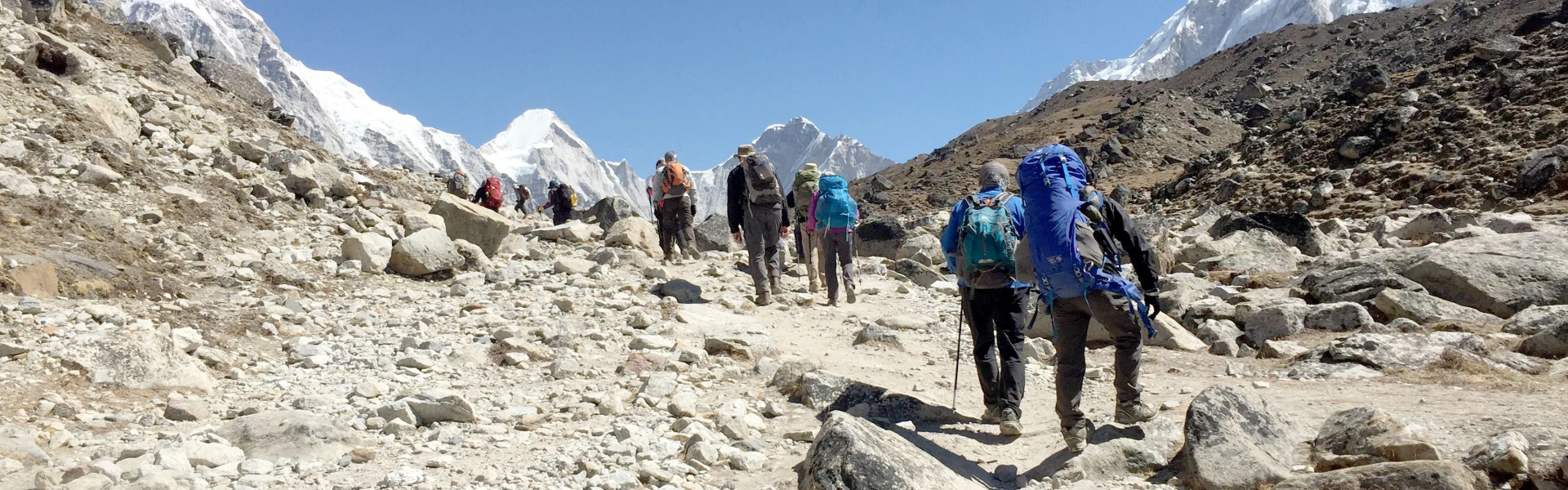
The lower route includes stone paving, forest paths, suspension bridges and a long climb into Namche Bazaar. Between Namche and Tengboche, you also lose elevation before climbing again. Higher up, stone steps become less common, but the ground gets rockier and more uneven, particularly around Lobuche and Gorak Shep.
EBC is therefore not gentle overall. Its difficulty comes more from altitude, long walking days and elevation changes than endless staircases.
Which Nepal Treks Have the Most Stone Steps?
If you particularly dislike stone staircases, the Annapurna region deserves closer attention.
Annapurna Base Camp
The direct Annapurna Base Camp route has several sections where stone steps make up a significant part of the walking.
One of the clearest examples is around Chhomrong and Sinuwa. From Chhomrong, you descend steeply toward the Chhomrong Khola before climbing back up the other side toward Sinuwa. On the return journey, you cross the same valley again in reverse.
This can make the route feel harder than the elevation profile first suggests. You may spend considerable effort descending, only to regain much of that height shortly afterwards.
That down to the river and back up again pattern is one of the main reasons ABC does not feel like one steady climb toward base camp.
It is also worth separating ABC from itineraries that include Ghorepani and Poon Hill. The famous Ulleri staircase is part of the classic Ghorepani approach and is not automatically included in a direct ABC itinerary.
Ghorepani–Poon Hill
Poon Hill is often recommended as a short trek for first-time visitors to Nepal. Considering its duration and maximum elevation, that makes sense.
But the trail itself is not always gentle.
On the classic route through Tikhedhunga and Ulleri, trekkers face a staircase of more than 3,000 stone steps before continuing toward Ghorepani.
There is also plenty of downhill walking, especially if you complete the circuit through Tadapani and Ghandruk.
This is why “beginner-friendly” and “gentle trail” are not necessarily the same thing. Poon Hill may be shorter and lower than many Himalayan treks, but someone who dislikes stairs may still find parts of it surprisingly demanding.
Road access has also changed some Poon Hill itineraries. Depending on where your trek starts, you may be able to skip part of the traditional lower approach. The exact starting point therefore matters when comparing routes.
Which Treks Have the Toughest Descents?
Stone steps are only part of the picture. A trek can have relatively few staircases and still include a long or difficult descent.
Annapurna Circuit
The clearest example is the descent from Thorong La to Muktinath.
Much of the Annapurna Circuit gains elevation gradually as the route follows the Marsyangdi Valley toward Manang and eventually Thorong La. Because of this, some sections can feel more gradual than stair-heavy routes.
That changes after crossing the pass.
The route descends roughly 1,600 meters toward Muktinath, making it one of the longest major descents among Nepal's popular teahouse treks.
For anyone particularly concerned about long downhill sections, this part of the trek deserves more attention than the circuit's average gradient.
Mardi Himal
Mardi Himal is another trek where the short duration can make the terrain seem easier than it actually is.
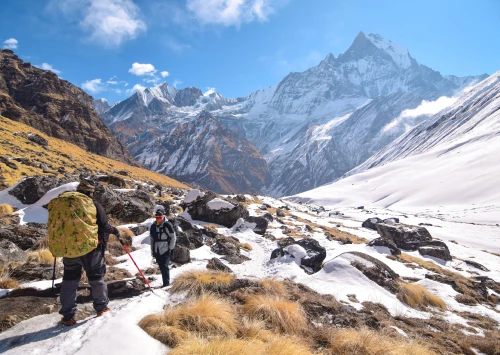
The route climbs through forest before following the higher ridge toward High Camp and the upper viewpoints. Several sections involve sustained uphill or downhill walking rather than a broad, gradual valley trail.
Depending on the itinerary, the return toward Siding can also involve a long and fairly steep descent.
So choosing Mardi Himal simply because it takes fewer days than EBC or Langtang does not necessarily mean you are choosing gentler terrain.
Annapurna Base Camp
ABC does not have one single descent comparable to Thorong La. Its challenge comes instead from repeated drops and climbs, particularly around Chhomrong, which you encounter again on the return journey.
For some trekkers, that repeated pattern can feel more tiring than one long, continuous descent.
Which Trek Should You Choose If You Want Gentler Terrain?
None of these treks stays flat or gradual from beginning to end. The better choice depends on the type of terrain you would most like to avoid.
For fewer long sections of stone steps, Langtang Valley is worth considering. The lower route is still uneven, but the higher valley offers more open and comparatively gradual walking.
The classic Everest Base Camp route may also suit trekkers who dislike stair-heavy trails and are comfortable with a much longer, higher trek. It still has major climbs, descents and rough ground, but long stone staircases are not its defining challenge.
For stone-heavy trails, look more carefully at Annapurna Base Camp and the classic Poon Hill route.
For one particularly long descent, the Thorong La to Muktinath section of the Annapurna Circuit stands out.
Mardi Himal sits somewhere in between. It is shorter than many of the other treks in this comparison, but parts of the route are still steep, so duration alone is not a good guide to how gentle the trail will feel.
Gentler Trail Does Not Mean Easier Trek
Trail character is only one part of trekking difficulty.
A route with fewer stone steps can still be harder overall because of altitude, longer walking days or rougher terrain. Likewise, a shorter and lower trek can still feel demanding if it includes long staircases or repeated descents.
That is why it helps to look beyond labels such as easy, moderate or challenging.
If steep downhill sections or repeated stone steps are what bother you most, the shape of the trail may matter just as much as the trek's altitude or number of days.

Himalayan Joy Adventure (In house Team)
Call us on WhatsApp+977 9851031957OrChat with us