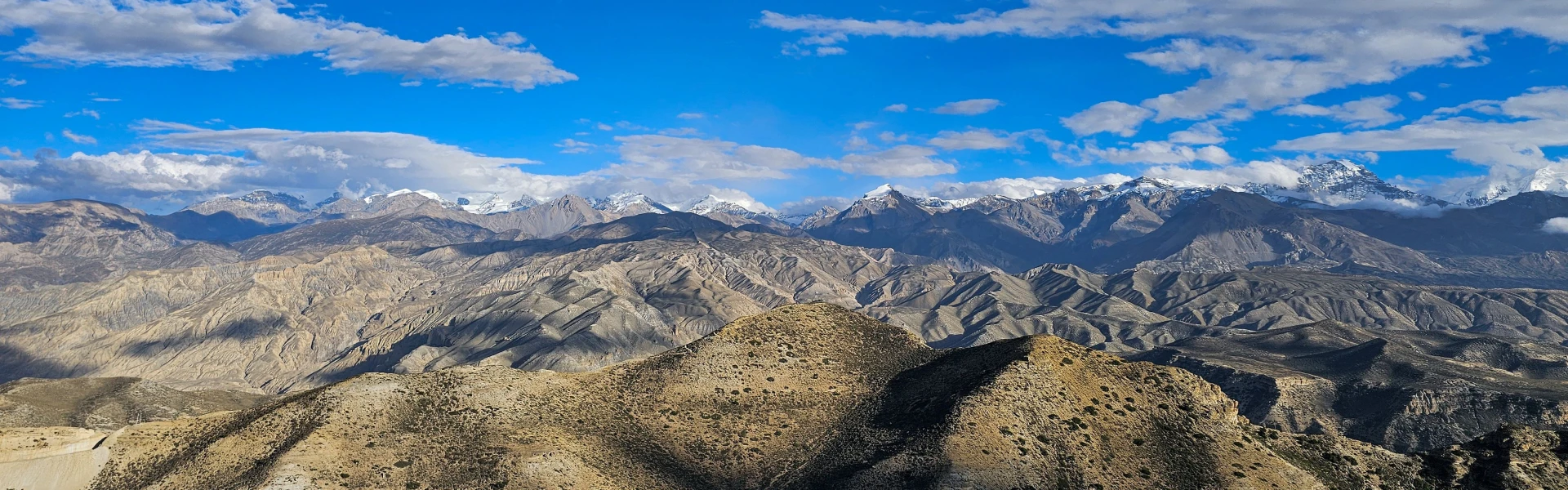
Planning a journey to Upper Mustang? See the main ways to reach Lo Manthang from Kathmandu or Pokhara, including flights to Jomsom, road travel, trekking, and jeep options.
How to Reach Upper Mustang: Routes from Kathmandu and Pokhara to Lo Manthang
Table of Contents
Reaching Upper Mustang is no longer only a trekking journey. Roads now extend through the region to Lo Manthang, so you can fly, drive, trek, or combine these options depending on your time and how much of the route you want to cover on foot.
For most travelers, the journey follows the same general route:
Kathmandu → Pokhara → Jomsom → Kagbeni → Lo Manthang
Pokhara and Jomsom are the main transport points, while Kagbeni is the gateway to restricted Upper Mustang. There is no regular passenger flight directly to Lo Manthang, so the final part of the journey must be completed by road, on foot, or by combining both.
The Route to Lo Manthang at a Glance
It helps to break the journey into three stages.
| Route | Main options | What it does |
|---|---|---|
| Kathmandu → Pokhara | Flight or road | Gets you to the main gateway for Mustang |
| Pokhara → Jomsom | Flight or road | Gets you into the Kali Gandaki Valley |
| Jomsom/Kagbeni → Lo Manthang | Trek, jeep or both | Takes you into Upper Mustang |
Jomsom is in Lower Mustang, so reaching Jomsom does not mean you have reached Upper Mustang. From there, the route continues north to Kagbeni and into the restricted region, passing settlements such as Chele, Ghami, and Tsarang before reaching Lo Manthang.
The best way to reach Jomsom may not be the best way to continue farther north.
Kathmandu to Pokhara: Flight or Road?
Most Upper Mustang journeys first travel from Kathmandu to Pokhara.
Flying from Kathmandu to Pokhara
A domestic flight is the quickest option and normally takes around half an hour. It is useful for shorter itineraries or for travelers who do not want to spend most of the day on the road.
Flights can still be affected by weather and operational delays, so leave some flexibility if you are connecting with another flight the following morning.
Traveling from Kathmandu to Pokhara by Road
Tourist buses, private cars, and jeeps travel between Kathmandu and Pokhara daily.
Road travel takes much longer than flying, and the actual journey time depends on traffic and road conditions. It works well for travelers who want to keep transport costs lower or are not in a hurry.
Flying usually makes more sense when time is limited. With a more flexible schedule, traveling by road is a straightforward alternative.
Pokhara to Jomsom: Flight or Road?
This part of the journey needs a little more planning because both flight reliability and road conditions can affect the itinerary.
Pokhara to Jomsom by Flight
Flying is the fastest way to reach Jomsom. The flight takes roughly 20 minutes and avoids a long road journey through the Kali Gandaki corridor.
Jomsom flights normally operate in the morning because winds tend to become stronger later in the day. They are also weather-dependent, so delays and cancellations are possible. Tara Air, for example, resumed its Pokhara–Jomsom service for the autumn 2026 season in September.
Because of this, avoid planning a very tight connection immediately after the flight.
Pokhara to Jomsom by Road
You can also reach Jomsom overland through Beni and the Kali Gandaki Valley.
The drive usually takes most of the day, and travel time can vary as road conditions change along the route. Conditions on the Pokhara–Beni–Jomsom approach can also be quite different from the drier roads farther north in Upper Mustang.
Which option makes more sense?
Choose the flight if saving time is the main priority.
Road travel is the practical alternative for travelers who prefer not to depend on a mountain flight or whose flight has been disrupted.
Jomsom and Kagbeni to Lo Manthang: Trek, Jeep or Both?
Once you reach Jomsom, the route continues north toward Kagbeni. From there, you can trek, travel by jeep, or use a combination of both.
Trekking to Lo Manthang
The traditional option is to continue on foot from the Kagbeni area through Upper Mustang.
A typical route passes through villages such as Chele, Ghami, and Tsarang before reaching Lo Manthang. The trek usually takes several days. Nepal Tourism Board describes Lo Manthang as reachable in around four trekking days, although actual itineraries vary depending on overnight stops and the route used.
Trekking makes more sense when the journey through Upper Mustang is an important part of the experience. It also gives your body more time to adjust as you gradually gain altitude.
Road development, however, has changed parts of the classic trekking route. Some sections now follow or cross vehicle tracks, which is why some travelers use a jeep for selected sections rather than walking the entire route.
Driving to Lo Manthang
You can now drive from Jomsom and Kagbeni to Lo Manthang.
The road continues through Upper Mustang, allowing suitable jeeps and 4WD vehicles to reach Lo Manthang without a multi-day trek. Parts of the route are still rough, though, and should not be compared with a normal paved highway.
In good, dry conditions, the drive from Kagbeni toward Lo Manthang can take only several hours. In practice, many itineraries spread the journey over more than one day rather than trying to reach Lo Manthang as quickly as possible.
This is a practical option for travelers who want to visit Upper Mustang without completing the full trek.
Combining Trekking and Jeep Travel
You do not have to trek or drive the entire route.
Some travelers walk selected sections and use a jeep for others. Another common option is to trek toward Lo Manthang and use road transport for part of the return journey.
This gives you a trekking experience without requiring you to walk every road-linked section of the classic route.
So the main question is not simply “Can I drive to Lo Manthang?” You can. A more useful question is: how much of the journey do you want to experience on foot?
How Long Should the Journey to Lo Manthang Take?
Road access has made it possible to reach Lo Manthang much faster than before, but travel time alone should not decide the itinerary.

Lo Manthang sits at roughly 3,800 meters. Jomsom and Kagbeni are considerably lower, so traveling north quickly by vehicle means gaining altitude much faster than you would while trekking.
A jeep itinerary should therefore allow for a gradual journey rather than simply trying to reach Lo Manthang in the shortest possible time.
It helps to think about two different timings:
Possible travel time: How quickly a vehicle can physically cover the route.
Sensible itinerary time: How much time you allow for altitude gain, road conditions, overnight stops, and places you may want to visit along the way.
Reaching Lo Manthang in one long push may be possible in good conditions, but spreading the journey out gives you a more gradual approach and some room for delays.
For trekkers, this adjustment happens more naturally because the journey already takes several days.
Which Route Combination Is Best for You?
There is no single best way to reach Upper Mustang. The right option mainly depends on your available time and how much of the journey you want to experience.
| Your priority | Route that usually makes most sense |
|---|---|
| Reach Lo Manthang as quickly as practical | Fly Kathmandu → Pokhara → Jomsom, then continue by jeep |
| Experience the traditional trekking journey | Reach Jomsom, then trek from Kagbeni toward Lo Manthang |
| Avoid depending on the Jomsom flight | Drive from Pokhara through Beni to Jomsom |
| Combine trekking with easier logistics | Reach Jomsom, trek selected sections, and use a jeep where useful |
| Travel more gradually by vehicle | Break the drive north into overnight stages instead of rushing directly to Lo Manthang |
The right option depends on how much time you have and how much of the journey you want to do on foot.
What If the Jomsom Flight or Road Is Disrupted?
It is worth having a backup plan before leaving Pokhara because both flights and road travel can be affected by mountain conditions.
If your Pokhara–Jomsom flight is cancelled, you can either wait for the next available flight or switch to road transport if conditions and your itinerary allow.
A spare day can be useful when the trip depends heavily on domestic flights.
Road disruptions should also be considered by section. A problem on the Beni–Jomsom route does not automatically mean the road farther north into Upper Mustang is affected in the same way.
Before leaving Pokhara, check the latest flight status and road conditions rather than relying only on normal published travel times.
What Must Be Arranged Before Entering Upper Mustang?
Upper Mustang remains a restricted area, so foreign travelers cannot simply arrive in Kagbeni and continue north independently.
A Restricted Area Permitis required. The Department of Immigration states that restricted-area permits are issued through authorized trekking agencies rather than directly to individual travelers. Its current guidance also states that solo trekking in restricted areas is not permitted.
As of October 2026, the Department of Immigration lists the Upper Mustang restricted-area fee at USD 50 per person per day.
An Annapurna Conservation Area entry permit is also required because Mustang lies within the Annapurna Conservation Area. The NTNC permit system currently lists the fee at NPR 3,000 for foreign nationals and NPR 1,000 for SAARC nationals.
Permit rules and fees can change, so confirm the latest requirements when arranging the trip rather than relying on older Upper Mustang articles online.
So, What Is the Best Way to Reach Upper Mustang?
Once you understand the main transport points, choosing how to reach Lo Manthang mostly comes down to your available time and how much of Upper Mustang you want to experience on foot.
Road access has made the region much easier to reach, but your itinerary should still allow enough time for altitude, changing mountain conditions, and the places you want to experience along the way.
If you are planning an Upper Mustang trek, you can also talk to our team about the best route based on your available days and how much of the journey you want to cover on foot.
Himalayan Joy Adventure (In house Team)
Call us on WhatsApp+977 9851031957OrChat with us