Is Annapurna Base Camp doable for first-time trekkers? Learn what the trek feels like, what to expect, and how beginners can prepare for it.
Annapurna Base Camp for First-Time Trekkers: Is It Really Doable?
Table of Contents
For a lot of people, this idea starts long before the trip itself.
Maybe you’ve been seeing photos of the Himalayas for years. Maybe it was a short reel on Instagram, a travel video, or just one mountain view that stayed in your mind.
And now, suddenly, it feels real.
You can travel on your own. You have the time. And Annapurna Base Camp is right there on the map.
But then the question comes in: Is this actually doable, or am I pushing too far for a first trek?
That’s a very normal place to be.
Most people who look at Annapurna Base Camp for the first time are not experienced trekkers. They may be fit, active, or used to travelling, but walking for several days in the mountains is a different kind of experience.
This guide is not here to make the trek sound easy. It is also not here to scare you away. The goal is simple. To give you a clear and honest idea of what the trek feels like, what makes it challenging, and whether it is a realistic first Himalayan trek for someone starting from scratch.
So, Is Annapurna Base Camp Actually Doable for Beginners?
Yes, it is doable. But it does need preparation.
The Annapurna Base Camp trek does not require climbing skills. You are not using ropes, ice axes, or technical mountain gear. At its core, it is a walking journey.
But it is still a mountain journey.
That means you need to be ready for long walking days, changing weather, basic accommodation, and the feeling of being outside your usual comfort zone.
Many first-time trekkers complete this trek every season. Some are gym-goers. Some are regular travellers. Some have never done a multi-day trek before. What usually helps them is not experience, but patience.
You don’t have to be the fastest person on the trail. You don’t have to prove anything. You just need to move steadily, listen to your body, and understand that the trek becomes easier when you stop rushing.
So no, Annapurna Base Camp is not too ambitious for a beginner. But it is something you should take seriously.
What Trekking to ABC Actually Feels Like (Day-to-Day Reality)
Most people imagine this trek as constant mountain views and big dramatic moments.
In reality, most of the day is much simpler. You wake up early. You have breakfast at the tea house. You start walking. After a few hours, you stop for lunch. Then you walk again until you reach the next village. In the evening, you eat, rest, and sleep early.
Then the next day, you do it again.
At first, everything feels new. The trail, the forests, the villages, the sound of the river, the people you meet along the way. After a few days, the routine becomes familiar. That routine is actually part of the experience.
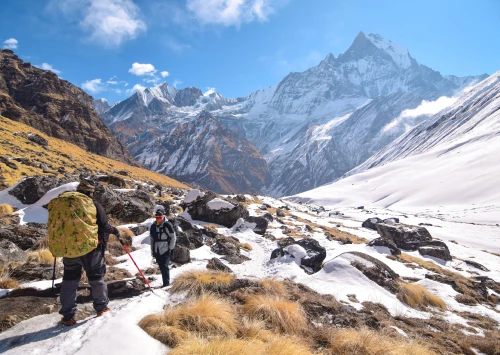
Some parts of the trail are quiet and simple. You may walk through forests for hours without seeing big mountain views. Then suddenly, the trail opens up and the peaks appear in front of you. Those moments feel more special because you have walked for them.
The tea houses are basic. Rooms are simple. Food is warm and filling. You start appreciating small things like dry socks, a hot drink, or sitting near the heater after a long day.
Slowly, the trek becomes less about reaching base camp quickly.
It becomes about settling into the rhythm of the trail.
What Most First-Time Trekkers Underestimate
The biggest challenge is usually not one single hard moment. It is the way small things add up.
A first-time trekker may feel fine on day one. Maybe even day two. But after walking day after day, the body starts to feel the effort. Your legs may feel heavy. Your shoulders may feel tired. Even simple uphill sections can feel longer than expected.
This is where many beginners realize that trekking fitness is different from gym fitness.
Strength helps, but stamina matters more. You need to be comfortable moving for hours at a steady pace. You also need to be okay with doing it again the next morning.
Another thing beginners underestimate is the mental side.
After the excitement settles, the trail can feel repetitive. Walk, eat, rest, repeat. Some people start questioning themselves during this phase.
That is normal.
The best way to handle it is to keep the goal small. Don’t think about the entire trek every day. Think about the next village. The next rest stop. The next warm meal.
That mindset makes the journey much easier.
ABC or Poon Hill: Which One Should You Start With?
This is a very common question. Should you go straight to Annapurna Base Camp, or should you start with something shorter like Ghorepani Poon Hill?
Both are good choices, but they give you different experiences.
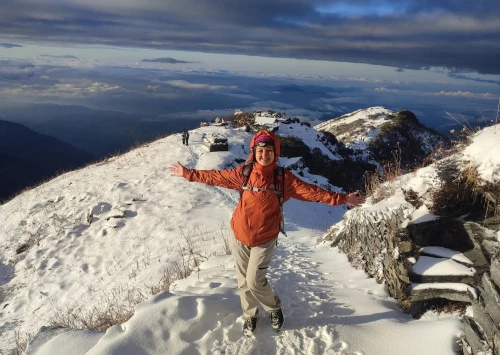
Poon Hill is shorter and easier. It usually takes around 4 to 5 days. The altitude is lower, the route is well-developed, and the sunrise view from Poon Hill is beautiful. If you are unsure about trekking and want a softer introduction, it is a safe and comfortable choice.
Annapurna Base Camp is a bigger commitment.
It takes more days. It goes higher. It asks more from your body. But it also gives you a deeper Himalayan experience.
You slowly move through villages, forests, rivers, and valleys before entering the Annapurna Sanctuary. By the time you reach base camp, you are surrounded by mountains on almost every side. That feeling is very different from a short viewpoint trek.
So which one should you choose?
If you only want to test trekking gently, Poon Hill makes sense. But if your dream is to feel properly inside the Himalayas, and you are ready to prepare, Annapurna Base Camp is a realistic first trek.
You don’t need to “graduate” from Poon Hill before doing ABC. You just need to be honest about your fitness, preparation, and expectations.
Trekking Solo or With a Guide (What You Should Know First)
The Annapurna Base Camp route is one of the more popular trekking trails in Nepal. There are villages, tea houses, and other trekkers along the way.
So yes, many people think about doing it independently.
For someone with trekking experience, that can work well. But for a first-timer, the question is not only about whether the route is possible. It is also about how much you want to manage on your own.
When you trek independently, you are responsible for everything. Finding the route, deciding where to stop, managing your pace, checking rooms, handling changes in weather, and knowing what to do if you feel unwell.
None of these things are impossible.
But together, they can become mentally tiring. A guide makes the trek smoother. You don’t have to think about every small decision. A good guide helps with pacing, local communication, daily planning, and small problems that may come up on the trail.
This does not mean everyone needs a guide. Some travellers enjoy the freedom of doing things alone. But if this is your first trek and your first time in the Himalayas, having support can make the experience feel much more relaxed.
It is not about being weak or incapable. It is about deciding how much responsibility you want to carry during the trek.
Budget, Gear, and Getting Sick (The Practical Side of the Trek)
This is the part where many people start overthinking. How much will it cost? What do I need to buy? What if my stomach gets upset?
In reality, the practical side is simpler than it feels at the beginning.
For most travellers, the biggest cost is getting to Nepal. Once you are here, the trek itself is quite manageable. Your main costs are permits, transport, food, accommodation, and gear.
Tea houses on the trail are basic and relatively affordable. Food prices become slightly higher as you go up because everything has to be carried into the mountains. Still, it is not usually shocking if you plan properly.
For gear, you do not need to buy everything new.
Kathmandu, especially Thamel, has plenty of rental and trekking shops. Items like sleeping bags and down jackets can be rented. You should be more careful with shoes, because uncomfortable footwear can ruin the trek very quickly.
At a basic level, you need good trekking shoes, warm layers, a jacket, a sleeping bag, a small backpack, and simple personal items. Comfort matters more than brand.
Getting sick is another common worry.
Some travellers do get stomach issues in Nepal, especially if they are not careful with food and water. But it does not happen to everyone. Drinking safe water, eating cooked food, and keeping your hands clean helps a lot.
On the trek itself, altitude is usually a bigger concern than stomach problems. You don’t need to panic about altitude, but you do need to respect it. Walk slowly, drink enough water, and don’t ignore how your body feels.
Is Mid-March a Good Time for ABC?
Yes, mid-March is a good time for the Annapurna Base Camp trek.
It is the beginning of the spring trekking season in Nepal. The weather is usually more stable than winter, and the mornings often offer clear mountain views.
In the lower sections, rhododendron forests also begin to bloom around this time. That makes the trail feel more colourful, especially in the early part of the trek.
But mid-March is still not summer.
Mornings and nights can be cold, especially as you go higher. At base camp, temperatures can drop below freezing. So warm clothing is still important.
You should also expect other trekkers on the trail. Spring is a popular season, so the route will not feel empty. For many first-time trekkers, that is actually a good thing. It makes the trail feel more active and reassuring.
Overall, mid-March gives you a good balance. Better weather, good mountain views, blooming forests, and a lively trekking atmosphere.
Common Mistakes That Make the Trek Feel Harder Than It Should Be
Most problems on the ABC trek come from simple mistakes. The first is starting too fast.
In the beginning, your body feels fresh. You may feel strong and excited, so you walk faster than needed. But trekking is not about the first day. It is about saving enough energy for the whole journey.
Another mistake is carrying too much.
Many beginners pack things “just in case.” Extra clothes, extra gadgets, extra items they never use. After a few days, every extra kilo starts to matter.
Then there is the mistake of ignoring small signs from the body.
A headache, loss of appetite, unusual tiredness, or poor sleep should not be brushed aside. It does not always mean something serious, but it is always better to slow down and pay attention.
Some people also come with no walking preparation at all.
You don’t need intense training, but doing regular walks, stairs, or light cardio before the trek can make a big difference. It helps your body understand what long movement feels like.
The final mistake is comparing yourself with others.
Someone will always walk faster. Someone will always seem more comfortable. That does not matter.
Your pace is the pace that gets you there safely.
So, Is This a Bad Idea or One of the Best Decisions You’ll Make?
Honestly, it depends on how you approach it.
If you expect Annapurna Base Camp to be easy, comfortable, and smooth every day, it may feel harder than you imagined.
There will be tired moments. Cold mornings. Long steps. Basic rooms. Maybe a day when you question why you chose this for yourself.
But that is also part of what makes the trek meaningful.
You don’t need years of trekking experience. You don’t need perfect fitness. You need preparation, patience, and the willingness to keep going slowly.
Somewhere along the way, the question changes.
At first, you may keep thinking, “Can I really do this?”
Then one day, you realize, “I am already doing it.” That is the beauty of the Annapurna Base Camp trek.
It feels big from the outside. But once you are on the trail, it becomes one day at a time. One village at a time. One step at a time.
So no, it is not a bad idea. For the right person, with the right preparation, it can become one of the most memorable journeys of their life.
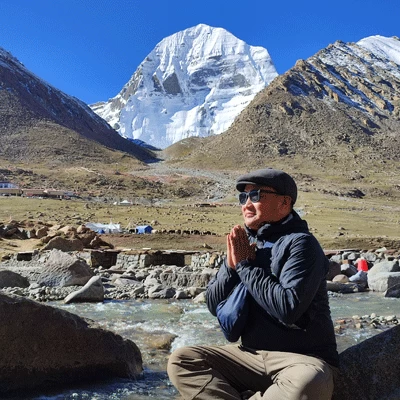
Tika Bahadur Rai (Trek & Tour Leader)
Call us on WhatsApp+977 9851031957OrChat with us