Thinking about the Tsum Valley Trek as your first long trek in Nepal? This honest guide explains the walking days, altitude, teahouses, and whether the journey is right for you.
Is the Tsum Valley Trek Difficult? An Honest Guide for First-Time Trekkers
Table of Contents
The honest answer is that the Tsum Valley Trek can feel challenging, especially if it is your first long trek in Nepal. But it is not difficult because you need climbing skills or have to cross an extreme mountain pass.
What makes Tsum Valley demanding is the full journey: a long drive to reach the trail, several days of walking on uneven mountain paths, simple places to stay, and the fact that you move farther away from normal comforts as you go deeper into the valley.
Some days will leave you pleasantly tired. Others may test your legs, patience, or confidence more than you expect. Still, a first-time trekker can enjoy Tsum Valley with reasonable fitness, proper preparation, and realistic expectations about the journey.
This guide explains what actually feels difficult on the Tsum Valley Trek, how it compares with other well-known routes in Nepal, and whether it is the right trek for you.
Tsum Valley Trek Difficulty at a Glance
The Tsum Valley Trek is a long and remote mountain journey, but the standard route does not require climbing experience or technical mountaineering skills.
What to Expect | Quick Answer |
|---|---|
Overall difficulty | Challenging, but possible for a prepared first-time trekker |
Total trip duration | Around 14 days, including travel and trekking days |
Usual hiking time | Around 5–7 hours on most trekking days |
Highest point | Around 3,700 m near Mu Gompa |
Trail | Uneven paths, stone steps, bridges, and uphill and downhill walking |
Altitude | Needs care, but lower than Everest Base Camp and high-pass treks |
Accommodation | Simple teahouses with basic facilities |
Climbing skills needed | None |
What may feel hardest | Several long walking days, simple comfort, and being far from normal facilities |
Best suited for | Active travellers who are happy walking for hours and living simply for a while |
What Actually Makes the Tsum Valley Trek Difficult?
The difficulty of Tsum Valley comes in stages rather than from one big obstacle.
You first spend a long day traveling from Kathmandu to Machha Khola. Then you walk through the Budhi Gandaki valley toward Jagat and Lokpa before entering Tsum itself. By the time you reach Chumling, Chhokangparo, Nile, and Mu Gompa, you have already spent several days on the trail.
For many first-time trekkers, that is the real test: staying comfortable with the rhythm of the journey for more than a week.
The Long Journey Before the Trek Even Begins
The trip begins with a full-day drive from Kathmandu to Machha Khola. The route passes through Dhading Besi, Arughat, and Soti Khola before following the Budhi Gandaki River toward the trekking start point.
It is a scenic journey, with hills, villages, terraced fields, and river views along the way. But it is also long. After Arughat, the road becomes rougher, and the final stretch can be bumpy.
By the time you arrive in Machha Khola, you may already be ready for a warm meal and an early night. This is not a problem, but it is worth knowing that you do not begin walking completely fresh.
Try not to arrive in Kathmandu after a long international flight and leave for the trek immediately the next morning. A little time to rest, sleep properly, and check your gear can make the start of the journey feel much smoother.
The First Walking Days Before You Reach Tsum Valley
Your first proper walking day takes you from Machha Khola to Jagat, at around 1,340 m. The trail follows the Budhi Gandaki valley and passes through places such as Dobhan and Yaru Khola. You cross bridges, walk over stone steps, and deal with small uphill and downhill sections before reaching Jagat.
The altitude is still fairly low here. What most first-time trekkers notice is the walking itself.
You are wearing your boots for hours, carrying a daypack, and moving up and down rather than following one flat path. By afternoon, even a short uphill section can feel harder than expected because your legs are not yet used to walking day after day.
The next day from Jagat to Lokpa is another long walking day. After Philim, the route leaves the main Manaslu trail and turns north toward Tsum Valley. Lokpa, at around 2,240 m, is the gateway to the valley.
By the time you arrive in Lokpa, altitude is usually not the main issue. What you feel more is the effect of two long days on your legs.
Long Days on Uneven Mountain Trails
From Lokpa, the route becomes quieter and starts to feel more like a proper mountain journey.
The walk to Chumling begins with a descent through forest before crossing the Lungwa Khola. After the crossing, the trail climbs steadily toward Chumling at around 2,380 m. The path includes forest tracks, stone steps, rocky sections, and narrow trails that rise and fall with the landscape.
The following day from Chumling to Chhokangparo is where many trekkers start to feel the difference in their legs. The route crosses suspension bridges over the Syar River and gradually climbs toward Chhokangparo, at around 3,031 m.
The tiring part is not one particular stretch. It is the fact that you are walking for several hours each day, often with uphill and downhill sections mixed together.
The return journey can test your knees as well. Going downhill may feel easier for breathing, but after several days on the trail, long descents through Chumling and Lokpa can still leave your legs tired.
Good boots and trekking poles can make a real difference. More importantly, do not judge yourself by how quickly other people walk. A comfortable pace is better than rushing early and feeling exhausted by afternoon.
Should You Be Worried About Altitude on the Tsum Valley Trek?
Altitude matters on the Tsum Valley Trek, but it is not usually the main reason people struggle.
The height rises gradually as you move from Lokpa at around 2,240 m to Chumling at 2,380 m, Chhokangparo at 3,031 m, and Nile at around 3,361 m before continuing toward Mu Gompa in Upper Tsum.
As you go higher, uphill walking may feel slower than it did near Machha Khola or Jagat. You may get out of breath more easily, sleep differently, or feel more tired by the end of the day.
The important thing is to be honest about how you feel. Tell your guide early if you develop a headache that does not improve, feel unusually weak, lose your appetite, or start feeling unwell. Do not stay quiet because you do not want to slow down the group.
The route gives you several days to gain height rather than taking you quickly into Upper Tsum. That gradual approach helps, but altitude should still be taken seriously. A sensible pace, enough water, regular meals, and good communication with your guide all matter.
What Staying in Tsum Valley Is Really Like
The places you stay change as you move deeper into the valley.
Jagat and Lokpa are still on the lower side of the route, where villages feel more connected to the main trekking trail. Once you reach Chumling, Chhokangparo, Nile, and the area near Mu Gompa, the journey feels quieter and more remote.
Accommodation is usually in simple local teahouses or lodges. In places such as Jagat, Chumling, and Chhokangparo, you can expect a basic room, twin beds, blankets, and shared toilets. Near Mu Gompa, the stay may be even simpler, sometimes in a monastery or a small lodge close to the village.
Meals are warm and filling, but food choices become more limited farther into Upper Tsum. Phone signal, Wi-Fi, charging, and hot showers are useful extras rather than something to rely on every evening.
For some first-time trekkers, this change in comfort is harder than the walking. The routine becomes simple: walk, eat, rest, sleep, and begin again the next morning.
Once you accept that slower rhythm, it often becomes one of the best parts of the trek.
How Weather Can Make an Ordinary Day Feel Harder
Weather can change how the same trail feels from one day to the next.
Lower places such as Machha Khola, Jagat, and Philim can feel warm during the day, especially when you are climbing stone steps or walking through exposed sections of the Budhi Gandaki Valley. Farther up, around Chhokangparo, Nile, and Mu Gompa, mornings and evenings can feel much colder.
Rain can make stone steps in the lower valley slippery. It can also slow you down on forest sections between Lokpa and Chumling, especially near stream crossings and bridge approaches.
A rain jacket, warm layer, gloves, and waterproof cover for your daypack can make a normal day much more comfortable when the weather changes.
How Does Tsum Valley Compare With Other Popular Treks in Nepal?
Tsum Valley is not the highest or most physically extreme trek in Nepal. But it can still feel demanding because it is a long journey into a quiet valley where facilities become simpler as you go farther in.
The easiest way to understand Tsum Valley is to compare it with three treks many first-time visitors already know.
Trek | How It Compares With Tsum Valley | Main Difference |
Everest Base Camp goes much higher, so altitude is usually the bigger concern. The route is also busier, with more lodges, shops, and other trekkers along the way. | Tsum Valley is lower, quieter, and more focused on villages, monasteries, and local culture. | |
Annapurna Circuit is usually more demanding because it reaches much higher altitude and involves crossing Thorong La Pass. | Tsum Valley has no major high pass, though the upper valley feels quieter and less developed. | |
Manaslu Circuit is tougher overall because of its higher altitude, longer high-mountain sections, and the crossing of Larke La Pass. | Tsum Valley is the gentler option in the same wider region, but it is still a long and remote trek. |
For most first-time trekkers, Tsum Valley is easier than Annapurna Circuit and Manaslu Circuit because it does not involve a high mountain pass. It is also lower than Everest Base Camp, which makes altitude less intense.
That does not automatically make Tsum Valley easy. Its challenge comes from the length of the journey, repeated walking days, and the slower pace of life in the upper villages.
Can a First-Time Trekker Do the Tsum Valley Trek?
Yes, a first-time trekker can do the Tsum Valley Trek, but it is not the easiest first trek in Nepal.
You do not need climbing experience or years of trekking behind you. However, you should be reasonably active, comfortable walking for several hours a day, and willing to spend more than a week in simple mountain villages with fewer everyday comforts.
Tsum Valley May Be a Good Fit for You If…
You can already walk for around 5 to 6 hours with a small daypack, or you have enough time to build up to that before your trip. Previous multi-day hiking experience is helpful, but it is not essential for everyone.
It also suits you if you are happy with simple teahouses, limited Wi-Fi, hot showers, and a slower daily routine. You should allow enough time for the full journey rather than trying to fit it into a rushed Nepal itinerary.
Consider Another Trek First If…
Tsum Valley may not be the best first choice if you have never done long walks and do not have time to prepare before coming to Nepal.
It may also be less suitable if you need reliable Wi-Fi, hot showers, and more developed facilities every day, or if you have fewer than around 15–16 days available in Nepal.
A shorter cultural trek, such as the Tamang Heritage Trail, can be a better first step before committing to a longer and more remote journey like Tsum Valley.
How to Prepare for the Tsum Valley Trek
You do not need an intense training program. The aim is simply to arrive with enough walking fitness that the first few days do not feel like a shock.
Build Your Walking Fitness
Walk regularly in the weeks before your trek and slowly increase the length of your walks. Hills, stairs, and uneven paths are especially useful.
As a simple benchmark, it helps to be able to walk for three to four hours at a relaxed pace without feeling completely exhausted. Regular exercise such as hiking, cycling, gym work, or long walks will all help.
Break In Your Boots and Test Your Daypack
Do not wear new trekking boots for the first time in Nepal. Walk in them at home first, ideally on longer walks, so you know they fit well and do not cause blisters.
It is also useful to practice with a small daypack. On the trek, you will carry water, snacks, a rain jacket, warm layers, sunscreen, and personal items. A pack that feels light at home can feel very different after a few hours of uphill walking.
Pack Smart and Arrive Rested
You will need layers for warm lower valleys and cold mornings in Upper Tsum. A rain jacket, a warm fleece or down layer, gloves, sun protection, and a waterproof cover for your daypack are practical essentials.
A power bank, small headlamp, and a few favorite snacks can also make simple teahouse life easier.
Finally, give yourself time in Kathmandu before the trek begins. Resting after a long flight, checking your gear, and sleeping well before the drive to Machha Khola can make the start of the trip much smoother.
Frequently Asked Questions About Tsum Valley Trek Difficulty
Can I Do the Tsum Valley Trek Without Previous Trekking Experience?
Yes, a prepared first-time trekker can do Tsum Valley. You do not need climbing experience, but you should be comfortable walking for several hours a day and staying in simple mountain lodges for more than a week.
What Is the Hardest Part of the Tsum Valley Trek?
For many trekkers, the hardest part is not one steep climb. It is the build-up of long walking days from Machha Khola through Jagat, Lokpa, Chumling, and Upper Tsum, especially once the legs are already tired.
How Many Hours Do You Walk Each Day on the Tsum Valley Trek?
Most trekking days involve around five to seven hours of walking. Some days feel shorter, while others feel longer because of uphill sections, uneven trails, weather, or tired legs from the previous days.
Do I Need a Guide for the Tsum Valley Trek?
Yes. Tsum Valley is a restricted trekking area, so the trek must be arranged through a registered trekking agency with the required licensed guide, TIMS card, and permits. Confirm the latest requirements before booking, as rules can change.
Final Verdict: Is Tsum Valley Trek Difficult?
The Tsum Valley Trek is challenging, but it is not an extreme trek.
What makes it demanding is the length of the journey: a long road approach, several days of walking, simple accommodation, and fewer comforts as you move deeper into the valley.
For a first-time trekker, Tsum Valley can be a very rewarding choice if you are reasonably active, prepare before coming, and are comfortable with a slower mountain routine.
But if you want short walking days, more developed facilities, or an easier first trek, another route may suit you better.
The best way to approach Tsum Valley is not to ask only whether it is “easy” or “hard.” Ask whether you are ready to walk patiently, live simply for a while, and enjoy a quieter side of the Himalayas. For the right person, that is exactly what makes the trek special.
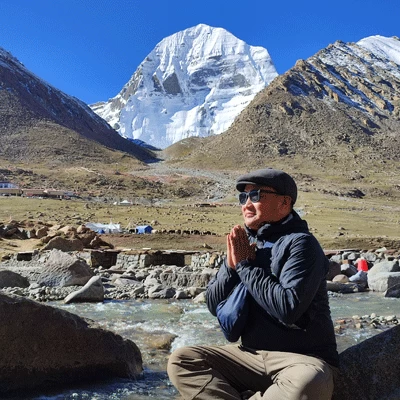
Tika Bahadur Rai (Trek & Tour Leader)
Call us on WhatsApp+977 9851031957OrChat with us