A simple guide to 15 useful Nepali phrases for greeting people, ordering at tea houses, asking basic questions, and communicating more naturally during a trek in Nepal.
15 Nepali Phrases Every Trekker Should Know Before Nepal
Table of Contents
You do not need to speak Nepali to trek in Nepal. On most popular routes, guides, lodge owners, and people working with travelers can communicate in basic English.
Still, knowing a few Nepali words can make everyday moments feel more personal. A simple Namaste when you enter a tea house, Dhanyabad after a meal, or Bistarai while walking with your guide can create a warmer connection.
Nobody expects you to speak perfectly. Even if your pronunciation is not exact, most people will appreciate the effort.
In this guide, we have included 15 simple Nepali phrases that are easy to remember and useful during a trek. You can use them while greeting people, ordering food, asking simple questions, or speaking with your guide along the trail.
Greetings and Polite Phrases
These are some of the easiest Nepali phrases to use during a trek. You can say them when meeting your guide, entering a tea house, speaking with lodge owners, or passing people along the trail.
1. Namaste (Hello)
Pronunciation: Na-ma-stay
Namaste is the most common greeting in Nepal. You can use it when meeting someone, entering a lodge, or greeting people in villages along the trail.
Many people say it while gently placing their palms together, although the gesture is not always necessary. It can also be used when saying goodbye.
2. Dhanyabad (Thank You)
Pronunciation: Dhan-ya-baad
Dhanyabad means “thank you.” You can use it after receiving food, getting directions, or when someone helps you during the trek.
People working on popular trekking routes will understand “thank you,” but saying dhanyabad can make the exchange feel a little more personal.
3. Hajur (Yes / Pardon?)
Pronunciation: Ha-jur
Hajur is a respectful word that you will hear often in Nepal. Its meaning depends on the situation.
It can mean “yes,” but it may also be used when politely asking someone to repeat what they said. Guides, lodge owners, and local people may also use it simply to show that they are listening.
4. Maaf Garnuhos (Sorry / Excuse Me)
Pronunciation: Maaf gar-nu-hos
Maaf garnuhos is a polite way to say “sorry” or “excuse me.”
You may use it when moving past someone on a narrow trail, interrupting a conversation, or apologizing for a small mistake. It is a respectful phrase, even if your pronunciation is not perfect.
Useful Nepali Phrases at Tea Houses
Tea houses are where you will eat, rest, and spend most evenings during a trek. These simple phrases can help when ordering drinks, complimenting food, or asking about prices.
5. Pani Dinuhos (Please Give Me Water)
Pronunciation: Paa-nee dee-nu-hos
Pani means water, while dinuhos is a polite way of asking someone to give you something.
You can use this phrase when asking for drinking water at a tea house. It is still helpful to clarify whether you want boiled water, bottled water, or a refill.
6. Ek Cup Chiya Dinuhos (Please Give Me One Cup of Tea)
Pronunciation: Ek cup chee-ya dee-nu-hos
Chiya means tea, and it is one of the most useful words to know during a trek.
You can use this phrase when ordering tea at a lodge or stopping for a break along the trail. You may also hear different options such as milk tea, black tea, ginger tea, or lemon tea.
7. Mitho Cha (It Is Delicious)
Pronunciation: Mee-tho cha
Mitho cha is a simple way to say that the food or drink tastes good.
You can say it after eating dal bhat, momos, soup, or any meal prepared at the tea house. It is a small compliment that lodge owners and cooks will usually appreciate.
8. Kati Ho? (How Much Is It?)
Pronunciation: Ka-tee ho
Kati ho? means “How much is it?”
You can use it when asking the price of tea, snacks, water, or small items. For larger payments or a detailed bill, it is better to check the written amount clearly.
9. Thik Cha (It Is Okay)
Pronunciation: Theek cha
Thik cha is one of the most common phrases you will hear in Nepal. It can mean “okay,” “that is fine,” or “no problem.”
You can use it when agreeing with a plan, accepting something, or letting someone know that everything is fine.
Useful Nepali Phrases on the Trail
These phrases may be useful while walking between villages, asking simple directions, or speaking with your guide during the trek.
10. Bato Kata Ho? (Which Way Is the Trail?)
Pronunciation: Baa-to ka-ta ho
Bato kata ho? means “Which way is the trail?” or “Where is the path?”
You can use it near a village, road junction, or tea house when you are unsure which direction to take. On remote or confusing trails, however, it is always safer to stay with your guide.
11. Kati Tadha Cha? (How Far Is It?)
Pronunciation: Ka-tee taa-dha cha
Kati tadha cha? means “How far is it?”
You may use it when asking about the next village, tea house, viewpoint, or overnight stop. The answer is often given in walking time rather than kilometres, and that time may vary depending on your pace.
12. Bistarai (Slowly)
Pronunciation: Bis-ta-rai
Bistarai means “slowly.” It is a word you may hear often from your guide, especially during steep climbs or at higher altitudes.
Walking slowly helps you save energy, maintain a steady pace, and give your body more time to adjust to the altitude.
13. Ramro Cha (It Is Good or Beautiful)
Pronunciation: Raam-ro cha
Ramro cha means “It is good,” “It is nice,” or “It is beautiful.”
You can use it when talking about mountain views, a village, the weather, your meal, or the day’s walk. It is a simple positive phrase that works in many situations.
Phrases for Asking How Someone Feels
These phrases can help you greet people more naturally and explain when you are not feeling well during the trek.
14. Sanchai Hunuhunchha? (How Are You?)
Pronunciation: Saan-chai hu-nu-hun-chha
Sanchai hunuhunchha? is a respectful way to ask someone, “How are you?” or “Are you well?”
You can use it when speaking with your guide, lodge owners, or people you meet more than once along the trail. A common reply is Sanchai chhu, which means “I am fine.”
15. Malai Sancho Chhaina (I Am Not Feeling Well)
Pronunciation: Ma-lai saan-cho chhai-na
Malai sancho chhaina means “I am not feeling well.”
This phrase may help you tell your guide or lodge staff that something is wrong. However, if you have a headache, dizziness, breathing difficulty, vomiting, unusual weakness, or any other concerning symptom, explain it clearly and inform your guide immediately.
Do You Need to Speak Nepali While Trekking?
No, you do not need to speak Nepali to complete a trek in Nepal. On popular routes, most guides and many tea-house owners can communicate in basic English.
Your guide can also help when you need to discuss accommodation, meals, directions, transport, permits, or health concerns. For anything important, especially altitude symptoms or medical problems, clear communication is more important than trying to speak Nepali.
Still, learning a few simple phrases can make everyday interactions feel warmer. Saying "Namaste" when you enter a lodge, "Dhanyabad" after a meal, or "Mitho cha" to compliment the food shows respect and appreciation.
Nepal is also home to many different languages. People in trekking regions may speak Sherpa, Tamang, Gurung, Thakali, Rai, or another local language at home. However, Nepali is widely understood and is the most practical local language for travelers to learn.
Final Thoughts
You do not need to memorize all 15 phrases before your trek. Start with a few simple ones such as Namaste, Dhanyabad, and Bistarai, then use the others when they feel natural.
Your pronunciation may not be perfect, and that is completely fine. Most people will understand that you are making an effort.
A few Nepali words will not change the difficulty of your trek, but they can make small moments feel more personal. A greeting at a tea house, a thank you after a meal, or a simple compliment can help you connect more warmly with the people you meet along the trail.
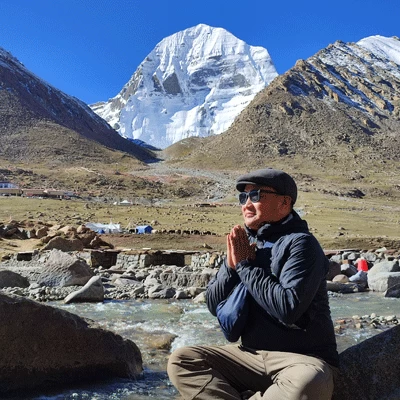
Tika Bahadur Rai (Trek & Tour Leader)
Call us on WhatsApp+977 9851031957OrChat with us