Want big Himalayan views without trekking above 4,000m? This guide compares the best lower-altitude treks in Nepal and explains what kind of mountain experience each one offers.
Best Nepal Treks With Big Mountain Views Without Going Above 4,000m
Table of Contents
You do not have to trek above 4,000 meters to get the kind of mountain views that make a trip to Nepal feel worthwhile.
Several lower routes still put you in front of the Annapurna, Dhaulagiri, Everest and Langtang ranges. What changes is the type of view. On some treks, you look across a wide Himalayan panorama. On others, one or two mountains dominate the skyline. Some take you into valleys where the peaks rise around you rather than sitting across the horizon.
The important part is choosing a route that genuinely stays below your altitude limit. Some well-known “low-altitude” treks are described using the altitude of their highest lodge even though the main viewpoint is above 4,000 meters.
This guide only includes routes that offer strong mountain scenery while keeping the trek itself below that mark.
What We Mean by “Staying Below 4,000m”
We are looking at the highest point you actually hike to, not just where you sleep. That matters on treks such as Mardi Himal, where High Camp is around 3,580 m but the standard Upper Viewpoint is around 4,200m.
Optional side trips count as well. Khopra Ridge itself qualifies at around 3,660m, for example, but the hike to Khayer Lake goes well above 4,000m.
Mountain views also need to be a major reason to do the trek. So this is not a list of every Nepal trek below 4,000m. Each route also needs to offer genuinely strong mountain scenery.
And staying below 4,000m does not mean altitude is no longer a concern. Nepal Tourism Board advises trekkers to be alert to acute mountain sickness above 2,500m.
The Nepal Treks That Give You the Most Mountain Scenery Below 4,000m
Poon Hill — Best for a Wide Annapurna and Dhaulagiri Panorama
If you want a lot of mountain scenery without going particularly high, Poon Hill is difficult to overlook.
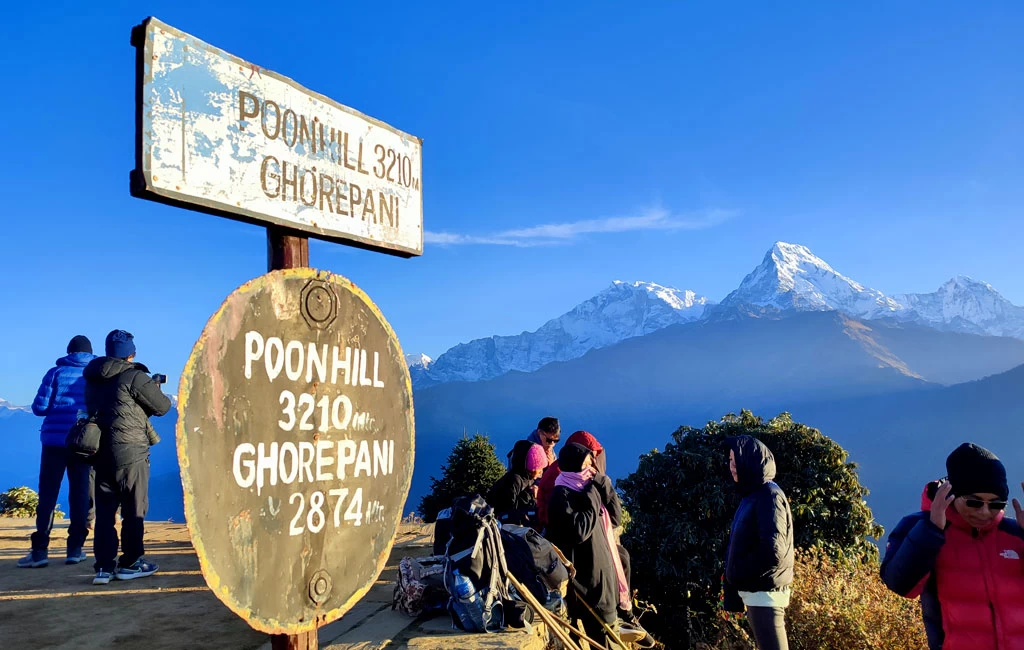
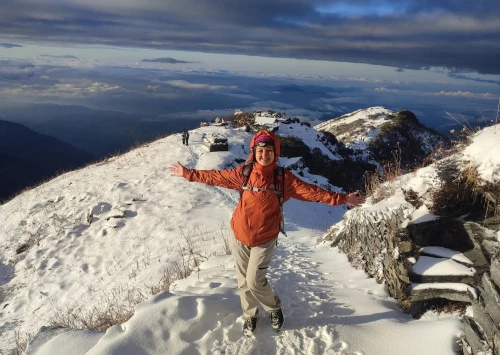
The viewpoint sits at 3,210m above Ghorepani. From there, the skyline stretches across the Annapurna and Dhaulagiri ranges, including Dhaulagiri I, Annapurna I, Annapurna South, Hiunchuli and Machhapuchhre.
Its strength is not how close you get to a particular mountain. It is the width of the view. On a clear morning, several major peaks spread across the horizon at once.
Poon Hill works particularly well for a first trek in Nepal if you want the classic Himalayan panorama without getting close to 4,000m.
The trade-off is popularity. It is one of Nepal's best-known viewpoints, so if quieter trails matter just as much as the scenery, other routes in this list may suit you better.
Khopra Ridge — Best for a More Dramatic View of Dhaulagiri
Khopra Ridge gives you a different experience even though it lies in the same broad Annapurna region as Poon Hill.
The ridge reaches around 3,660m. Dhaulagiri dominates the western side of the view across the Kali Gandaki Valley, with Annapurna South, Nilgiri and other peaks visible around the ridge.
If you are less interested in the widest possible panorama and more interested in a mountain view that feels imposing, Khopra has the advantage.
There is one important condition.
Many Khopra itineraries include a day hike to Khayer Lake, which climbs to roughly 4,600m or higher depending on the altitude used for the lake. If staying below 4,000m is non-negotiable, your itinerary needs to finish at Khopra Ridge and leave Khayer Lake out.
With that adjustment, Khopra remains one of the strongest options for dramatic mountain scenery below 4,000m.
Mohare Danda — Best if You Want Similar Big Views on a Quieter Trail
Mohare Danda reaches around 3,300m and looks toward both the Dhaulagiri and Annapurna ranges. The panorama includes peaks such as Dhaulagiri I, Annapurna South, Nilgiri and Machhapuchhre.
Its appeal makes the most sense when compared with Poon Hill.
Both offer broad mountain panoramas without taking you particularly high. Mohare Danda, however, follows a quieter community-lodge route through the hills west of the main Poon Hill trail.
The reason to choose Mohare is not that its mountain views are necessarily better. It is a good alternative if you want a similar style of Annapurna foothill panorama without making Poon Hill itself the center of the trek.
Everest View Trek — Best Way to See Everest Without Trekking Above 4,000m
If seeing Everest itself matters to you, this is the obvious route to consider.
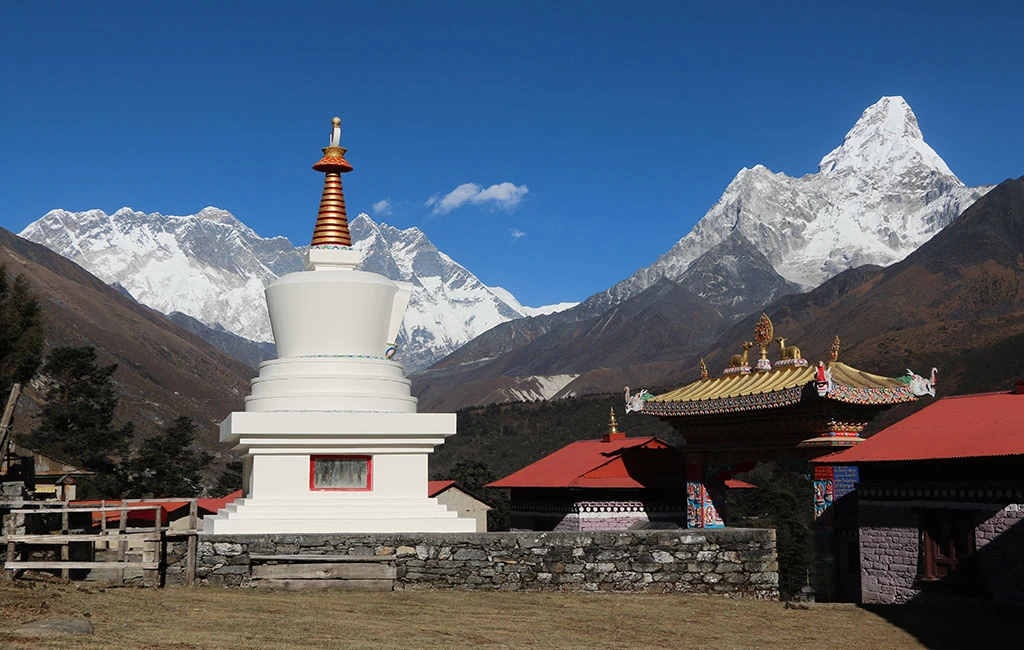
An Everest View Trek itinerary normally follows the lower section of the Everest Base Camp trail through Lukla, Phakding and Namche Bazaar. Some versions continue to Tengboche at 3,860m, while a common acclimatisation walk above Namche visits the Hotel Everest View area without crossing 4,000m.
From this part of the Khumbu, you can see Everest along with Lhotse, Nuptse, Thamserku and Ama Dablam.
The main thing is to have the right expectation.
You are seeing Everest from the lower Khumbu, not getting the much closer perspective available farther along the Everest Base Camp route and around Kala Patthar. From many places on this trek, the sharper pyramid of Ama Dablam may actually catch your eye first.
That is not a weakness. It is simply a different Everest experience.
Choose this route if seeing the Everest range matters more than getting as physically close to Everest as possible.
Langtang to Kyanjin Gompa — Best for Feeling Surrounded by Mountains
Langtang offers something the ridge viewpoints above do not.
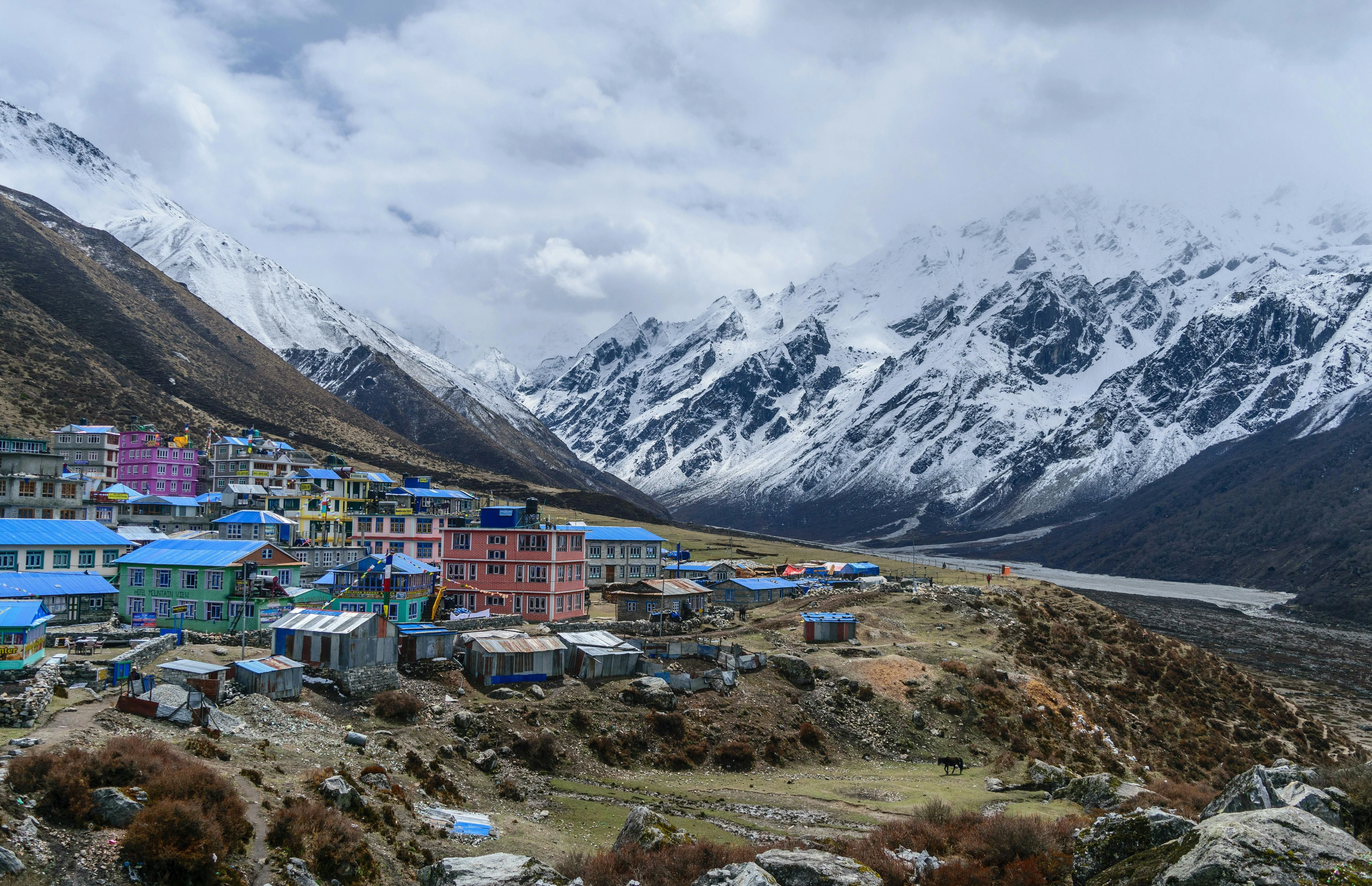
Instead of climbing to a hill and looking across at the Himalayas, you walk deeper into the Langtang Valley until you reach Kyanjin Gompa at around 3,870m. The settlement sits beneath surrounding peaks and glaciers near the upper end of the valley.
If you want the feeling of being inside a Himalayan landscape, that may matter more than having the widest possible panorama.
The usual Langtang Valley experience often continues higher. Kyanjin Ri reaches about 4,773m, while Tserko Ri goes higher still.
With a firm 4,000m limit, Kyanjin Gompa becomes your main destination. You can spend time around the valley and choose lower walks rather than climbing either of those viewpoints.
You miss the famous elevated panorama, but not the mountain setting that makes Kyanjin itself special.
Kori Danda — Best for a Quieter Annapurna Ridge Experience
Kori Danda is the least established route in this comparison, but it is an interesting choice if you want to stay just below 4,000m.
The ridge reaches roughly 3,800m above the Sikles area northeast of Pokhara. From the upper trail, the mountain backdrop includes Annapurna II, Annapurna IV, Lamjung Himal and Machhapuchhre.
The perspective is different from Poon Hill, Mohare Danda and Khopra. Those routes are particularly strong for views toward the western Annapurna and Dhaulagiri ranges, while Kori looks more directly toward the eastern side of the Annapurna massif.
It is also a more rustic trekking experience. Infrastructure is more limited than on Nepal's established teahouse routes, and some itineraries rely on simple lodges or camping in the upper sections.
Kori will not suit everyone. But if quieter surroundings and a less-developed route appeal to you, its roughly 3,800m high point keeps it within the limit.
Which Trek Gives You the Kind of Mountain View You Actually Want?
All six routes stay below 4,000m when planned as described above, but the mountain experience is quite different.
Khopra Ridge, Kyanjin Gompa, Everest View and Kori Danda take you closer to the mark and give you more of a high-Himalayan feel.
So rather than looking for one trek with the “best view,” decide what you want that view to look and feel like.
Popular Nepal Treks That Do Not Actually Stay Below 4,000m
A few well-known routes come close enough to 4,000m that they can easily be mistaken for suitable options.
With a strict altitude limit, however, they do not qualify.
Mardi Himal
Mardi Himal High Camp is only around 3,580m, which can make the trek look like it fits.
But the standard upper viewpoint is around 4,200m, while the actual base camp is higher again. A normal Mardi Himal itinerary that includes the viewpoint therefore goes beyond the limit.
Pikey Peak
Pikey Peak is another near miss.
The summit reaches approximately 4,065m. That is only 65 meters above the cutoff, but with a strict 4,000m mark, it still does not qualify.
You could remain in the surrounding lower areas without reaching the summit, but then you would be leaving out the viewpoint that gives the trek its name and much of its appeal.
Annapurna Base Camp
Annapurna Base Camp reaches approximately 4,130m.
It is not far beyond the threshold, but Base Camp is the destination of the trek itself. Unlike an optional side trip, you cannot remove it without changing what the trek fundamentally is.
What Do You Give Up by Keeping the Trek Below 4,000m?
Less than you might expect.
You can still watch sunrise over the Annapurna and Dhaulagiri ranges, stand opposite huge Himalayan peaks, see Everest from the Khumbu and walk into a valley surrounded by the Langtang Himal.
What you mainly give up is proximity and access to higher viewpoints.
A sub-4,000m itinerary will not take you to many of Nepal's high passes, higher base camps or viewpoints approaching 5,000m. In some regions, that means you see the mountains from farther away or from a lower angle.
That is the real compromise.
If reaching a particular base camp, crossing a high pass or standing on a high summit viewpoint is a major part of why you want to trek in Nepal, the 4,000m mark will limit your choices.
But if the mountain scenery matters more than reaching a particular altitude, you still have plenty of strong options.
So, Which Trek Would We Choose?
There is no single best choice.
For the classic Himalayan panorama with the most comfortable altitude margin, Poon Hill is hard to beat. If you want something more dramatic and do not mind going closer to 4,000m, Khopra Ridge stands out.
Beyond that, the better choice depends on what brought you to Nepal in the first place—Everest, quieter trails, a mountain valley or a less-developed ridge.
The important thing is that staying below 4,000m does not restrict you to distant foothill views. You can still get a genuine Himalayan trekking experience without going higher simply for the sake of it.
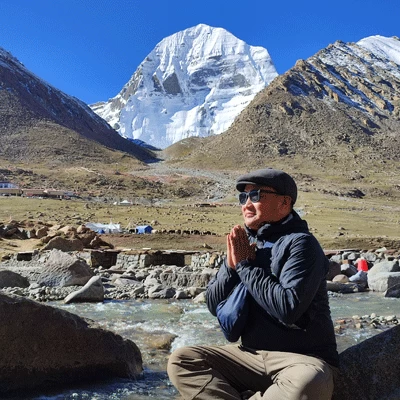
Tika Bahadur Rai (Trek & Tour Leader)
Call us on WhatsApp+977 9851031957OrChat with us